





Love Choices in 'Single's Inferno 2': How Honesty and Courage Shape Relationship Outcomes
Have you ever found yourself emotionally stirred by the romantic decisions made in Season 2 of Single's Inferno? This reality show is more than just a dating experiment—it acts like a mirror, reflecting our common hesitations,试探 (probing), and fears during the ambiguous phase of attraction. When lead participant Shin Se-kyung made her surprising choice between Jin-young and Jong-woo, many viewers couldn’t help but wonder: why didn’t she choose the person who made her smile like a freshly bloomed tulip?
Se-kyung’s Decision: Beyond Attraction, Security Matters More
Shin Se-kyung was undoubtedly the most radiant presence in Season 2—boasting beauty worthy of a Miss Korea crown, talent as a piano major from Seoul National University, and an indescribable gentleness. Early in the show, she clearly showed interest in Jin-young, and their chemistry sparked undeniable tension that thrilled audiences. Yet, in the end, she chose Jong-woo—a seemingly ordinary, even slightly awkward man.
This wasn’t random. Although Jin-young ignited emotional sparks, he never gave her clear emotional confirmation. He openly admitted curiosity about other women but hesitated to declare Se-kyung as his top priority. While this ambiguity might seem “measured” during the flirting stage, it actually revealed deep-seated insecurity.
Honesty vs. Avoidance: Who Is Truly Vulnerable?
In contrast, Jong-woo, though not eloquent, consistently expressed support and companionship. He didn’t wrap himself in grand promises but showed through actions: “I’m here—not to demand a response, but because I want you to be happy.” This pressure-free sincerity built a more stable emotional foundation.
Jin-young’s issue wasn’t a lack of merit, but being driven by fear—he feared losing control, appearing desperate, or loving “ungracefully.” So he spoke in circles, trying to maintain surface-level composure. But true composure doesn’t come from hiding your feelings; it stems from accepting and honestly expressing your emotions.
The Capacity to Love Lies in Facing Your Fears Directly
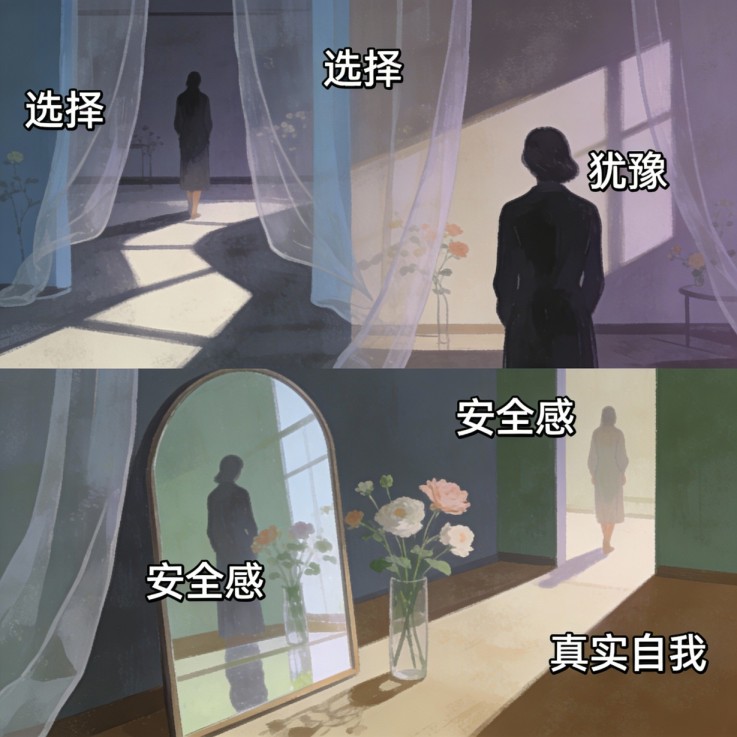
Se-kyung ultimately chose Jong-woo not because passion faded, but because she realized: a healthy relationship requires both partners to feel safe being themselves. Though Jong-woo also feared rejection, he chose to sit with that fear rather than let it dictate his actions. Even when Se-kyung cried over Jin-young, he stayed by her side while clearly stating, “You don’t owe me anything”—a boundary and thoughtfulness that mark mature love.
Jin-young’s so-called “honesty” was actually avoidance. He couldn’t say, “You’re the only one I want,” because he couldn’t bear the risk of rejection. This hesitation left Se-kyung in constant uncertainty, eventually wearing down even the strongest attraction.
The Real Winners Are Those Who Never Lose Themselves
Another couple, Yong-jae and Seo-yeon, further illustrated this point: they directly voiced their needs—“Can we talk a bit longer?” or “Let’s sleep together tonight”—without guessing games, only honesty. It was this straightforward communication that quickly deepened their bond.
Returning to Se-kyung’s choice, what she truly won wasn’t just a relationship, but a reaffirmation of her self-worth. She understood that long-term emotional security outweighs fleeting excitement. And Jong-woo? He grew immensely through this journey—from stumbling through his initial self-introduction to later expressing his feelings clearly while respecting boundaries. His progress was evident to all.
Lee Na-jeong also deserves praise: she bravely approached her crush, and though she didn’t end up paired, she gained confidence and experience. This mirrors real life: love doesn’t always go as planned, but every sincere effort helps us become someone more worthy of love.
So when you stand at a crossroads in love, remember this: true courage isn’t about achieving a perfect ending, but about staying authentic, honest, and respectful in love. No matter the outcome, as long as you haven’t lost yourself—you’ve already won.