





The Three Layers of Humanity in 'All of Us Are Dead': The Boundary Between Good and Evil, Ethical Dilemmas of Justice, and Choices in Coming of Age
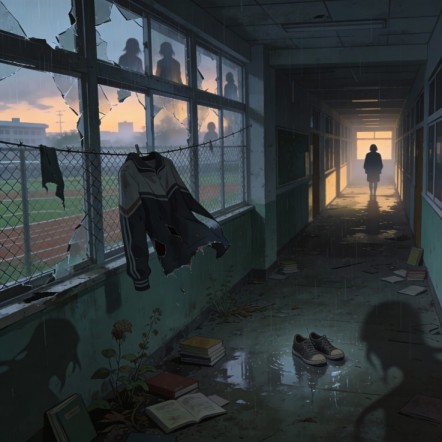
When a zombie virus erupts within a high school campus, students’ fates are no longer determined by grades or friendships—but thrust into the ultimate crucible of human nature. Netflix’s hit Korean drama All of Us Are Dead is far more than a visually intense apocalyptic thriller; it serves as a mirror reflecting deep-seated societal issues.
The First Layer: The Moral Divide Shaped by School Bullying
The story doesn’t begin by chance—a biology teacher, driven by his son’s prolonged suffering from school bullying, attempts to create a virus that would “make the weak strong.” This logic of fighting violence with greater violence exposes a common real-world fallacy: can only stronger brutality end brutality?
The concept of the “half-zombie” is profoundly symbolic. The first half-zombie is a girl forced to film a nude video under threat. Bitten in her desperate attempt to destroy the phone containing the footage, she doesn’t fully transform but retains consciousness and agency. Her existence becomes a silent indictment of injustice and a haunting question: can victims become perpetrators?
In contrast stands class president Nam On-jo, who also becomes a half-zombie yet clings steadfastly to her compassion. Her rebirth isn’t fueled by destruction but by protection. This stark juxtaposition delivers a powerful message: even in hell, one can still choose to be light.
The Second Layer: The Ethical Quandaries Behind Justice
All of Us Are Dead masterfully embeds the “trolley problem” into its narrative: if a helicopter can only carry limited passengers, and survivors might be asymptomatic carriers, do you rescue them? If destroying an entire city could halt the virus’s spread but kill all remaining survivors, should the button be pressed?
These choices have no easy answers, forcing characters to confront the tension between morality and utilitarianism. Repeated scenarios—such as whether to carry injured comrades who slow the group down, or isolate suspected carriers—each come with sacrifice and guilt. This isn’t just tactical survival; it’s a continuous interrogation of what true justice means. Can justice, when justified by the greater good, ethically abandon the few?
The Third Layer: Autonomous Choices in Adolescent Growth
Trapped within a sealed campus, these teenagers are prematurely burdened with decisions typically reserved for adulthood. They must constantly choose: hide or break out? Trust others or go it alone? Uphold principles or compromise to survive?
Each decision shapes their sense of self. Some collapse under fear; others awaken through responsibility. Notably, the show refuses to romanticize the “student” identity. Instead, it exposes entrenched hierarchies, gender biases, and collective indifference already festering within the school. Those who appear normal may harbor inner rot; the real “zombies” might not be the mindless infected, but the bystanders who turn a blind eye to suffering.
As viewers have pointed out: “Who is the true zombie—the one bitten, or the one who watches their peers suffer in silence?” Wrapped in a zombie apocalypse, the series delves into structural issues within East Asian society, adding profound realism to the coming-of-age narrative. 🌻