






The Mythological Roots of Aquarius: From Trojan Prince to Celestial Cupbearer
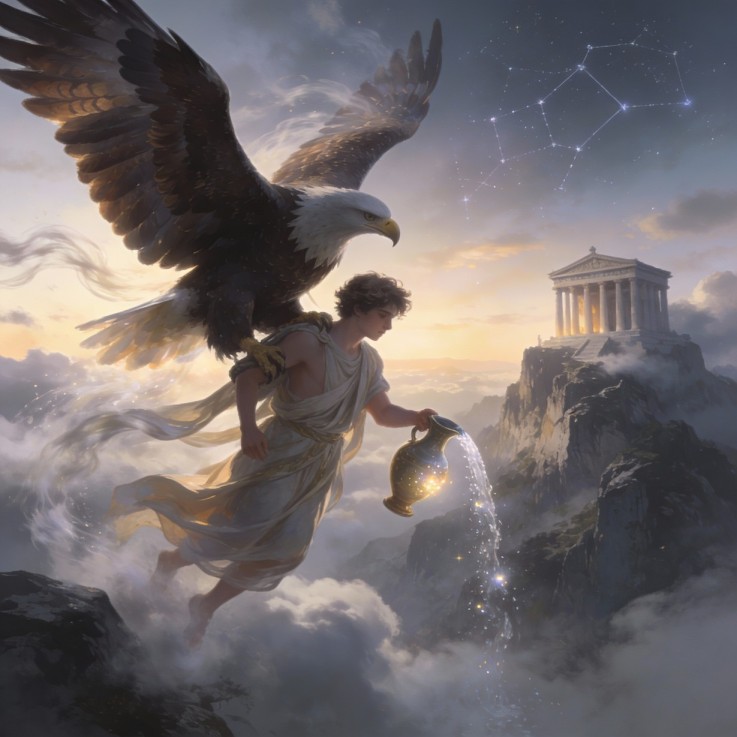
In the vast expanse of the night sky, Aquarius shines as the eleventh sign of the zodiac. Spanning from January 22 to February 19, this constellation symbolizes wisdom, innovation, and humanitarian ideals. Though commonly referred to as the "Water Bearer" in Chinese contexts, its astronomical name is more accurately the "Urna Aquarii"—a sacred vessel carrying divine nectar and celestial insight.
Four Mythological Origins of Aquarius
Ancient Greek mythology offers several versions of Aquarius’s origin: one involving Ganymede, son of the dawn goddess Eos; another tied to Deucalion, offspring of Prometheus and Clymene; and yet another linking it to Cecrops, the legendary founder of Athens. However, the most widely embraced tale centers on Ganymede, the prince of Troy, whose beauty captivated even the king of the gods.
The Missing Pourer at the Divine Feast
On Mount Olympus, Hebe, the goddess of youth, traditionally served nectar to the gods during their grand banquets. One day, as the feast commenced, Hebe failed to appear. The gods exchanged uneasy glances—even her father Ares was absent. Soon, a breathless servant arrived with news: Hebe had broken her leg the previous night and could not attend.
Though Zeus accepted the explanation, a pressing question remained: “Who will pour the wine?” A deity suggested Ganymede, the Trojan prince renowned for his extraordinary beauty that had enchanted countless maidens. Intrigued, Zeus immediately flew to Troy in the form of a mighty eagle.
A Fateful Ascent on Eagle’s Wings
At the royal pastures of Troy, Zeus beheld the radiant youth and was instantly smitten. Fearing King Priam would refuse a formal request, he decided to act swiftly. Transforming into a colossal eagle, he swooped down, seized the startled Ganymede, and soared into the heavens. The prince cried out in fear, struggling in vain as the earth receded beneath him.
Upon arriving at Olympus, the gods cheered. Zeus resumed his true form and gently explained the situation: with Hebe injured, Ganymede was chosen to serve as the new cupbearer. Though heartbroken to leave home, the prince submitted to divine will. His grace and vitality soon enlivened every gathering, earning Zeus’s deep admiration.
Grief on Earth and Divine Reparation
Back in Troy, the king and queen were devastated by their son’s disappearance. The king dispatched search parties in vain; the queen wept endlessly, gazing at the sky and whispering her son’s name. When Zeus learned of their sorrow—and noticed Ganymede’s growing melancholy—he felt remorse.
One night, he visited the Trojan king in a dream, revealing his identity and assuring him of his son’s honored place among the gods. To console the grieving parents, Zeus gifted them a magnificent divine horse. Upon waking, the king heard hoofbeats outside and found the celestial steed standing in his courtyard. Though no substitute for his child, the gift brought him solace.
An Eternal Constellation in Honor
To immortalize Ganymede’s faithful service and the joy he brought to Olympus, Zeus placed him among the stars as Aquarius—the Water Bearer. Forever pouring celestial waters from his urn, the constellation embodies wisdom, compassion, and transcendent intellect. This myth not only humanizes Aquarius but also reflects the essence of its patron deity, Athena: rationality, justice, and a spirit that rises above the mundane. 🌹